





Archive for the ‘Uncategorized’ Category
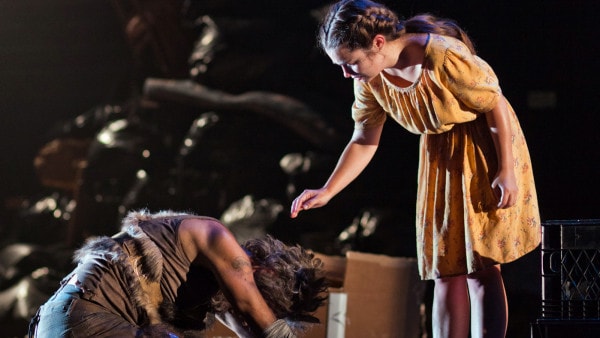
from Vinkensport.
Tuesday, April 20th, 2010First Digital Composer-in-Residence Interview
Saturday, February 20th, 2010Over the next nine months or so, I will be conducting candid interviews with some very exciting creative people, including producer Beth Morrison, composers Ted Hearne, Darcy James Argue, Corey Dargel, Leo Chadburn (aka Simon Bookish), and more.
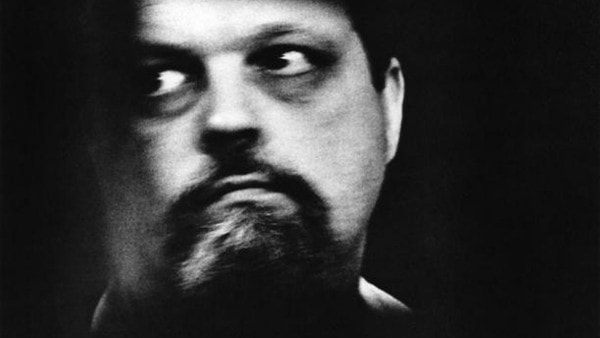
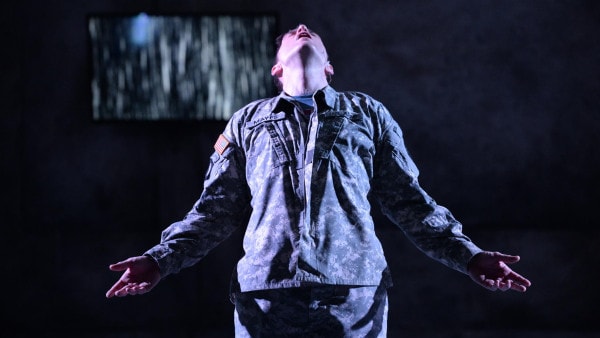
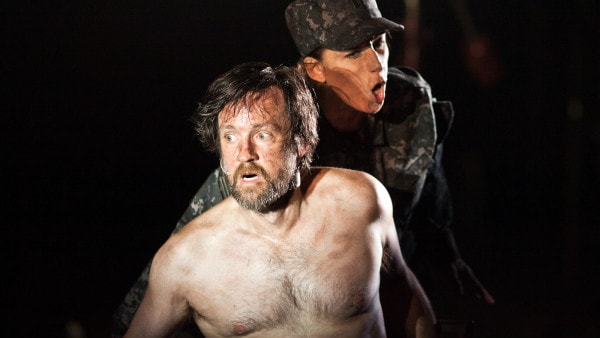
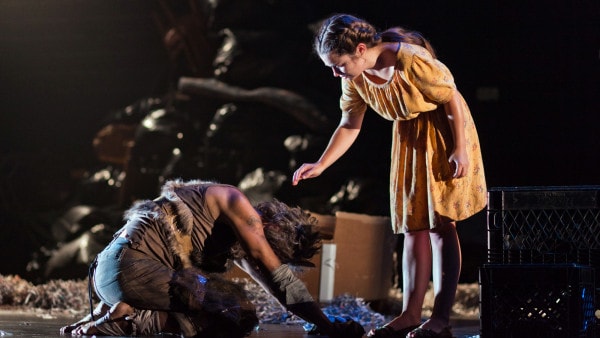
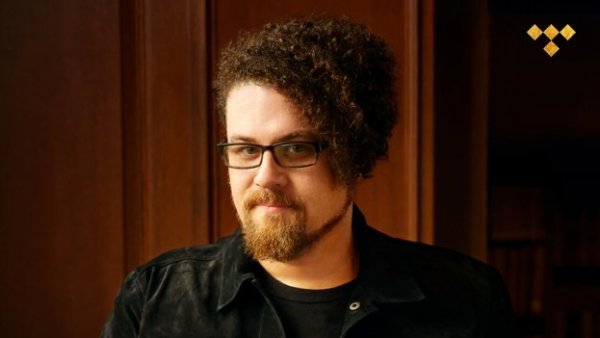
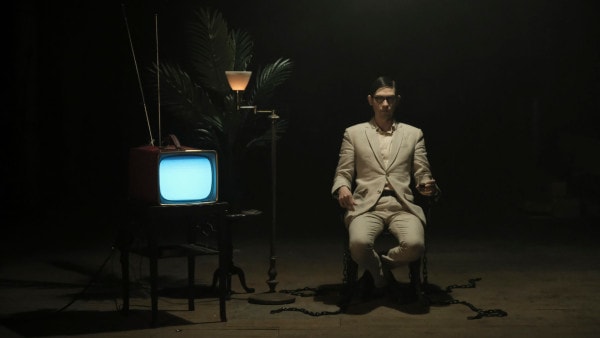
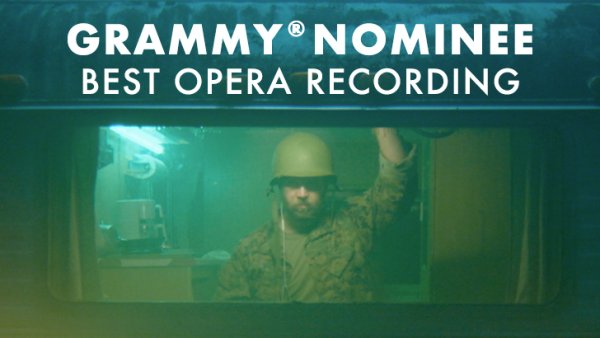
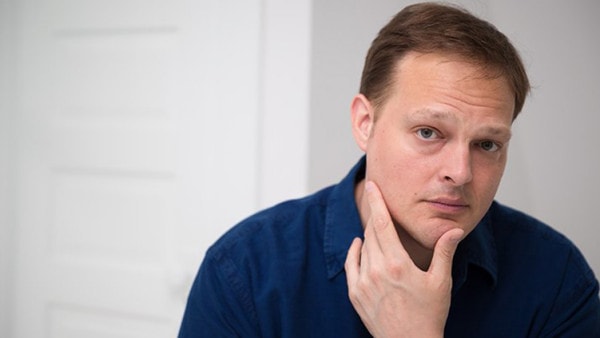
We kick things off with a group interview on the collaborative process with filmmaker Stephen Taylor, librettist Royce Vavrek, and composers Missy Mazzoli, who each have new operas being premiered at the end of the month at Bard Conservatory in New York. The conversation covers questions of influence, style, gender, narrative, technique, process and more.
Enjoy!
Digital Composer-In-Residence Video Blog #1 from digitalcomposerinresidence on Vimeo.
Howard Zinn (1922-2010)
Wednesday, January 27th, 2010I am very sad to hear–amidst so much terrible news from Washington–of the passing of historian Howard Zinn.
Though Zinn is best known for his seminal A People’s History of The United States, it is his 1970 book The Politics of History that has had the most profound effect on me. In this book he notes “Historical writings always have some effect on us. It may reinforce our passivity; it may activate us. In any case, the historian cannot choose to be neutral; he writes on a moving train.â€
Zinn’s work is one of the things that activated me, and led me to conclude that, as an artist, I too write on a moving train.
Oi To The World
Tuesday, December 22nd, 2009I just posted a file over at the Dilettante Blog; one of my favorite holiday songs: Tchaikovsky’s Dance of the Sugar Plum Fairies, as performed by The Vandals.
Back in 1996, when I was still a high schooler, The Vandals released a Christmas record called “Oi To The World.” I happened to randomly pick it up, and fell instantly in love with it. It’s been a holiday tradition for me ever since.
This year, I’m in Australia for the holidays, and completely forgot to pack it! Lucky for me, the whole record seems to have been uploaded in gloriously poor quality to YouTube in one of those weird I’m-really-an-audio-file-in-disguise-since-there’s-no-real-video-to-see-here files. Regardless I’m glad to have found it, and I thought I’d post a track or two here.
You might already know this song. No Doubt covered this track a number of years ago, skanking it up as they do, but I definitely prefer this original. And if you like this, the whole record seems to be up. My favorites: “Nothing’s Going To Ruin My Holiday,”"Thanx for Nothing,” and “Hang Myself From The Tree,” which totally has a Tuba solo! Their cover of “Here I Am, Lord” is also pretty amazing. (The easily offended might want to stay far away from C-H-R-I-S-T-M-A-S, and some others, which should be clear from the titles.)
But what sort of lefty curmudgeon would I be if I didn’t post the delightful rant against commercialism, “I Don’t Believe in Santa Claus”?
Happy Holidays All!
…is the Digital Composer-in-Residence.
Thursday, November 12th, 2009
So, the votes are in, and I’ve be chosen (elected?) as the first Digital Composer-in-Residence on DilettanteMusic.com. As part of this new job, I’ll be blogging a lot over there–(probably more than here!)–so why not head over and check it out? My first post went up this morning, and there will be more to follow soon!
DiletÂtante Music
Saturday, October 17th, 2009So, some breaking news from across the pond: I have been chosen as one of three finalists in the DiletÂtante Music DigÂiÂtal Composer-in-Residence comÂpeÂtiÂtion. (The other two are Chiayu, a Taiwanese composer studying at Duke, and Aaron Gervais, a fellow composer/drummer from Canada.)

As part of the competition, the London Sinfonietta has recorded my submitted piece, 1986, and starting on October 20th, the polls will be open for the people (that’s you!) to choose the 2010 Digital Composer-in-Residence. The polls will be closed and the winners announced on November 5th, culminating in a live performance of all of the works by the London SinÂfoniÂetta that night at Wilton’s Music Hall in London. Check out the event listing here, and keep an eye on the DiletÂtante blog for more information.
This morning, there was a feature on the competition on BBC3′s Music Matters, which you can listen to here for the next seven days. It includes clips of all three finalist’s works—all very different—as well as (earlier in the show) very interesting interviews with the Bang On A Can composers, Steve Martland, and a feature on In C.
Watch this space for more updates on interviews, podcasts, etc., as well as information on how you can vote!
On Speaking Softly
Wednesday, October 7th, 2009Sorry things have been so quiet over here for the past few months. In addition to my dissertation–which is going well, but definitely still-going–I’ve been writing a lot of music, and getting ready for the season, which now feels very much in full swing. Newspeak just got things going last night for our Oct 29 show at The Stone, and before that I was participating in a mini-residency at the University of Michigan in Ann Arbor, where I gave a talk to the grad composers, coached the percussion ensemble, and had a piece performed (amazingly!) by the UM Symphony Band under Michael Haithcock.
Kicking off the season was the launch party of The Coterie, a new opera company founded by my wonderful Librettist Royce, and a stellar performance of Speak Softly by Line C3 as part of the New Amsterdam Records new Archipelago series at Galapagos. Here’s the video:
Aren’t they great?!
Anyway, I will try harder to stay on top of this blog, but please be patient if every now and then I clearly phone it in by posting an “interesting quote” that I clearly dug up while doing dissertation research. (Anyone up for some Clement Greenberg?) Seriously, though, there are some (as yet unannounced) things that will definitely make appearances in this space, so I promise to only phone it in on occasion.
Happy Autumn!
Painting Yourself Into a Corner
Wednesday, July 1st, 2009Dan Johnson has an excellent account of the Ojai Festival over on his blog. Recently brought to my attention by the ever-observant (and also-excellent account giver!) Jeff Edelstein, the festival sounded utterly fantastic, with great performers and pieces. I am very envious that Dan was able to attend. (And Bravi to eighth blackbird for their deft curation!) But I have to say I have a slight beef with something he said.
In his review of Louis Andriessen’s Worker’s Union, Dan says:
Now, “political” music is a funny thing—Andriessen’s Marxist ideology paints him into a corner (…) Andriessen’s a Marxist, so he wants to cast off decadent bourgeois concert-hall culture in favor of brash, vernacular idioms, but on the other hand he doesn’t want to embrace popular/commercial culture. So he troubles his clear forms and pulses with épater-le-bourgeois dissonance, intensity and duration.
This statement is really interesting to me, but also a little confusing. I’m currently writing my dissertation on political music, and just wrote a few pages on Andriessen, so maybe this is not a fair debate—dissertation research versus well-done concert review—but I have a difficult time understanding how Andriessen’s Marxism has painted him into a corner.
Worker’s Union was written in 1975, in the middle of what was a sort of “early period†for Andriessen’s political work. During this period, Andriessen’s political music fell into two main categories. The first is a form of gebrauchmusik intended for use at political rallies. This included vocal music—Volkslied (1971) and Dat gebeurt in Vietnam (“This is happening in Vietnamâ€), both of which contained “collaborative chanting†intended to “express collective solidarity,â€â€”as well as instrumental music, like De Volharding (1972) and Worker’s Union (1975), which present repetition and “collective unison†instrumental textures as a metaphor to encourage perseverance in pursuit of a political cause.
The second category of Andriessen’s political music—the techniques of which would follow him forward out of the 70s and into the 80s and beyond—explored deeper philosophical underpinnings associated with the struggle against fascism—including the dialectically-minded Il Duce (1973), Il Principie (1973-74), and De Staat (1973-76), a triptych. These works draw inspiration from Brecht’s notion of “a-social models,†presenting problematic texts by Machiavelli, Mussolini, and Plato to teach the audience (via example) now not to behave. These utilize a dialectic that is Marxian, rather than Hegelian, and so (as Everett tells us) “the opposing forces of the conflict are transformed into an aspect of a new contradiction.†This type of thinking—as well as the lessons learned from work on Brecht and Eisler’s Die Maßnahme in 1972—solidified issues for Andriessen that extended beyond the mere protest pieces he was writing in the early/mid-70s.
So, there’s that. But I also don’t understand Dan’s claim that Andriessen didn’t want to embrace popular/commercial culture, granted this could be a matter of semantics. (What is “embrace� What is “popular�) For me the Orkest de Volharding embodies Andriessen’s political ideal of this period. Among other things, this group closed the gap between high and low culture by integrating instruments and techniques used in rock and jazz music—like electric guitar, and jazz articulation. It brought its revolutionary music into alternative performance spaces, like factories, schools, political rallies, and community centers. It served as an evolutionary step in a lineage from Cardew’s Scratch Orchestra, and Rzewski’s Musica Elletronica Viva, both important political ensembles from the late 1960s.
As for the notion of the épater-le-bourgeois, I think there is something to this, and I like the connection that Dan makes on this front. But I am less certain that the dissonance in Worker’s Union is a matter of merely wanting to shock the bourgeoisie—though that was probably part of it—as much as it is a by-product of the way the piece is constructed—i.e. as with the Scratch Orchestra: not necessarily intended to be played by “experts†but rather, by anyone who would be willing to put in the time and effort. That is, anyone with the courage and will to serve “the cause†can serve the cause.
Often, when people think of political music, they imagine a ranty obnoxious preaching-to-the-converted sort of drivel. And there is a certainly a lot of that out there. (Cardew alone could fill several concert programs worth of music that would tell you how awesome Mao is and why everything else is an atrocity.) But Andriessen isn’t really like that, and I wonder if as a result he sometimes gets a bad wrap—if, for example, people expect something more direct from him and if, when it’s not delivered, these same people feel some odd sense of disappointment. (And I am not suggesting that this is the case for Dan, rather stating a broader observation.)
With the exception of the very early pieces—Reconstructie, Dat gebeurt in Vietnam, etc.—Andriessen’s music is political on a higher level than just a propagandistic message. Even within this early period we start to see this. Of De Staat, he says “I wrote De Staat as a contribution to the debate about the relationship of music to politics.†This is not smash-the-state propaganda. This is political philosophy. If one is expecting propaganda, or one wants to be served a composition that is easily digestible in one sitting, then one will probably be disappointed with Andriessen’s political work—or, in my opinion, with any political work worth its salt.
Dan cites an interesting book review by Gregory Bloch, who observes:
Adlington suggests that a fascinating study would be to compare Andriessen with another deeply political composer, whose politics play out not only in his works but also in his approach to performers and institutions: Cornelius Cardew. The comparison is particularly instructive here, since much of Cardew’s music (like Andriessen’s worst music) is characterized precisely by a lack of ambivalence, a univocality that is, in the end, both an aesthetic and political failing.
This univocality, which I think can be found in Andriessen’s earlier works, is what ultimately makes that kind of preachy political music many have come to expect. But Andriessen, through his understanding of Marxist dialectics, has been able to escape this. So it just doesn’t make sense to me to say that Marxism has painted Andriessen into a corner. With all due respect to a fine review from an interesting writer, for my money, Marxism liberated Andriessen.
Trusting the Market
Tuesday, May 19th, 2009“Be wary when you hear about the glories of the market system. The market system is what we’ve had. Let the market decide, they say. The government mustn’t give people free health care; let the market decide.
Which is what the market has been doing—and that’s why we have forty-eight million people without health care. The market has decided that. Leave things to the market, and there are two million people homeless. Leave things to the market, and there are millions and millions of people who can’t pay their rent. Leave things to the market, and there are thirty-five million people who go hungry.”
– Howard Zinn, Changing Obama’s Military Mindset
Sunday Morning Trepanation
Sunday, May 17th, 2009
This morning I attended a rehearsal of the new music group TRANSIT, who will present the NY Premiere of my Sunday Morning Trepanation at the Gerswhin Hotel on May 21st at 8. The group sounded great–great great great players–but the rehearsal itself was a rather strange experience for me. SMT is a piece that feels somewhat distant from where I am today, though I still really like it. Clarinetist Sara Budde–who played a very recent piece of mind with NOW Ensemble–even commented: “This is by the same guy who wrote Spalding Gray?” It’s as if I was visiting a relative I hadn’t seen for a long time.
Sunday Morning Trepanation was composed seven years ago while I was a graduate student at the University of Michigan. The piece, “equates contemporary religion with the drilling of holes in the skull,” and is full of brutal sonic images: grinding, crushing, drilling; mangled hymns, contorted plainchant. (I was not very subtle at 23!)
But it was very interesting to hear what musical elements I have retained or lost from that period; to hear “early Little,” or whatever. For example, I’m still very interested in drama and dramatic pacing, use similar harmonic shades, mixing tonality and atonality somewhat freely, and still have certain orchestration preferences (vibes, e-bow), etc. But then there are the elements I’ve dropped, mostly to do with style rather than substance: giant time signatures in the score, a suspect interest in complexity which, though I think it works compositionally, now seems like an odd attempt to “sound modern”. I guess the heart of the matter is that the core of my music isn’t all that different that it was 7 years ago, it’s just changed in its surface and in its details. It put on a new coat; got some sensible shoes.
Anyway, if you’re interested you can listen to the piece here. (Careful, there are some pretty drastic volume levels!) And be sure to check out Transit on the 21st. It sounds like it is going to be a really interesting show–with music by Angelica Negron, Matt McBane, Daniel Wohl and others.